
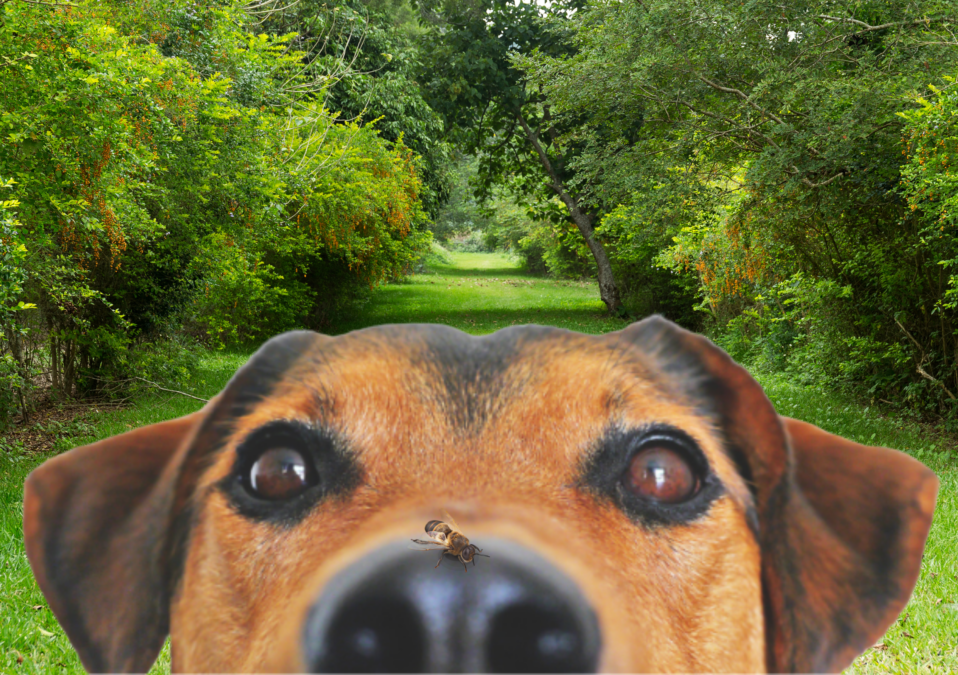
Whilst some are higher than others, all dogs have a prey drive. It may not be safe or sensible for dogs to go after bees or even a beehive but stalking and chasing prey is their natural instinct. If your dog often chases bees or other insects, it is likely that they are enthralled by their movement and wants to play. Other dogs may become irritated by the buzzing bees make, thus chase the bees as a reaction to this irritation.
What Should I Do If My Dog Eats A Bee?
Bees are venomous, not poisonous. So, whilst a bee sting can hurt your dog, you need not worry about your dog being poisoned. If you believe your dog has been stung by a bee it’s important to remain calm in order to assess the situation rationally. You will need to remove the stinger (if a honeybee is the culprit) DO NOT squeeze the stinger as this can actually force more venom into your pup. Instead lay a bank card or small spoon against their skin, sliding this in one direction to coax the stinger out. If your dog is in pain place an ice cube on the area to sooth the stinging.
If your dog is stung by a bee, expect your dog to experience some mild swelling, reddening and itching in most cases. However more severe reactions can lead to swelling, difficulty breathing, coughing, collapsing, committing and diarrhoea – if your dog is showing any of these symptoms call your vets as a matter of urgency.
Unfortunately, some dogs may develop a fear of flying insects after being stung, this cause 2 common responses. You may find your dog is even more determined to chase bees – eager to usher them away. However, it’s possible this fear will be displayed in more human-like ways such as trembling or freezing at the sight of a flying insect. It’s best to give your pup plenty of reassurance if this is the case, but if their fear persists you may need to consult a veterinary behaviourist.
Prevention Is Easier Than The Cure
The best way to prevent your dog from eating or chasing bees is to ensure they don’t come into contact with them. Something as simple as changing walking routes can be enough to prevent this behaviour if you find your dog is only chasing bees when on walking. Counter-conditioning training can help. The ‘leave it’ command can help teach your dog to leave flying insects alone.


Post a comment